You might say that Djali Brown-Cepeda, the founder and curator of NuevaYorkinos, was destined for her career path. The cultural preservationist, who oversees a digital archive and multimedia project documenting Latine and Caribbean culture and history in NYC, comes from a long line of community organizers, artists and activists. Her grandmother was also a librarian, and the importance of heritage and history was instilled in her from a young age.
The archive she runs holds more than 2,000 pieces of visual media and 1,500 stories and is continually growing. Considering over 25 percent of NYC is Latine, with representation from all over Latin America, such an undertaking seems a daunting task. But Djali is rooted in its purpose and promotion—she recently had an installation at Barclays for a New York Liberty game and is holding events during a micro residency at the Clemente—and plans to continue as long as possible.
Read on to learn about how NuevaYorkinos came to be, why Brown-Cepeda is so passionate about this work and the kind of storytelling that you can find on her platform.

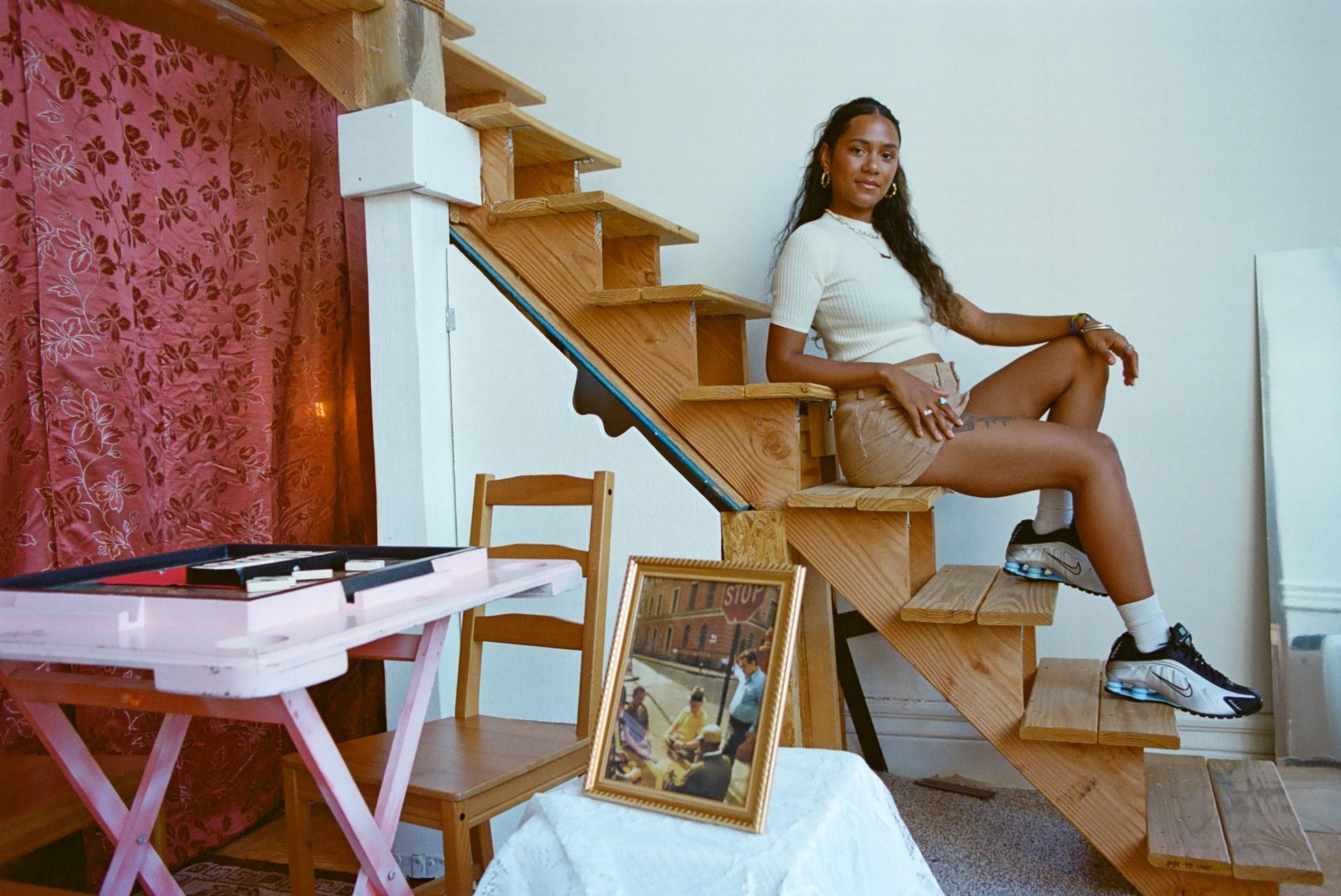
Djali-Brown-Cepeda at the Clemente
Tell us about the origins of NuevaYorkinos. How did it come to be?
Djali Brown-Cepeda: NuevaYorkinos was born on Valentine’s Day in 2019 while I was visiting the Dominican Republic with my family. Being formatively raised in a Black, Dominican, Haitian household, between Upper Manhattan and the South Bronx—two historically Caribbean strongholds in New York City—I thought a lot about my own family’s and community’s origin stories and pathways of migration to New York City, and what this all meant to the tapestry of the City. Coming from a documentary film background and working actively toward combating misrepresentation and underrepresentation, I created NuevaYorkinos as a way to take a stance against gentrification through storytelling and to offer a love letter to a city, and a people, who I love so dearly.
What are the biggest ways the diversity of Latine culture shows up in NYC?
DBC: I think there's a lot of work to do in our greater understanding of culture, race and ethnicity, its nuances and intersections. Latine and Caribbean culture and identity are not monolithic, and there are so many diasporas that have called New York City home for generations and will continue to do so. These Latine and Caribbean communities are reflective of a myriad of lived experiences, impacted and informed by race, gender, sexuality, access; that our stories are often reduced to single narratives that erase cultural, regional, linguistic and historical nuance is dangerous. Our culture shows up everywhere in NYC—in music, food, language, cultural production—and since NYC will continue to be home for so many communities, Latine culture in the City will only continue to diversity.
How would you describe the contributions of Latine people to NYC culture?
DBC: Latine and Caribbean folks have contributed to the sociocultural fabric of New York City since Juan Rodriguez became the first non-Lenape, first Black, first Caribbean, first Dominican-Haitian person to inhabit present-day Manhattan in Lenapehoking in 1613. From businesses to the block we’ve made home, gastronomy and the arts, social impact and politics, the contributions of Caribbean and Latine people in New York City are endless.
What role do you hope to play in the preservation and representation of Latino culture and immigrant experiences in NYC?
DBC: I hope that this archive stands the test of time; that folks can revisit it to learn more about Latine and Caribbean life in the boroughs over the decades. I wish, more than anything, to be a facilitator, a bridge. That my work ensures that a very important part of New York City, her heritage and her history are not forgotten.
What is your goal for NuevaYorkinos in the future?
DBC: I look forward to holding exhibitions, curating shows, growing the archive, working across mediums and doing all that I can to water this work and present it in all forms.
We asked Brown-Cepeda to choose representative images and stories from the NuevaYorkinos archive. See her selections with the submitters’ original captions and her own words on why each one resonates.

From the family archives of Maurice and Valentine
Manhattan
Image via @nuevayorkinos
“Cirilo [Moronta] is well known and loved In the Inwood/Washington Heights community and the Dominican Community in NYC as he has always been active in giving back hosting toy drives/ Diaper Drives and his well known Turkey drives every November.” —Joey
DBC: This photo was taken in the neighborhood that I grew up in, on my mother’s side, and is representative of immigrant entrepreneurship that’s vital to the history of Dominican New York. It tells the story of Cirilo Moronta, a Dominican entrepreneur who started a refrigeration business in the ’80s, on 178th Street and Amsterdam Avenue. In 1987, the Moronta family opened their own grocery, which still stands on the corner of Dyckman and Nagle. In 1996, they opened Dyckman Express Restaurant, and have owned 809 Restaurant & Lounge since 2004.
It’s an homage to a figure beloved not only in Inwood and Washington Heights but throughout the City—one story in a succession of Dominican business owners who migrated during the ’80s and ’90s. This image stands out because it was taken at a very well-known intersection on Dyckman (that still looks like this, outside of the cars), and for Cirilo’s welcoming disposition.

From the family archives of the Blaizin family
The Bronx
Image via @nuevayorkinos
"My parents were always the life of the party! I always say my father was my first and favorite DJ." —Sabine
DBC: I chose this photo for many reasons. Aesthetically, I love the way that Sabine’s parents’ outfits complement each other, and the wall in the living room. That they’re dancing—that’s a memory so many of us share. Sabine is an incredible DJ; whether or not we consider them so, our families are our first DJs, our first introductions to music. Music transcends time, acting as a portal between worlds and across waters. Rooted in a decolonial praxis, I also felt it important to choose this because anti-Blackness and anti-Haitian sentiment frequently bar Haitians from inclusion in conversations about Caribbean, Latin American, Latine and New York identity. It’s important we stand firmly against all systems at the intersection of anti-Blackness and xenophobia.

From the family archives of Jasmin Garcia
Brooklyn
Image via @nuevayorkinos (first image)
“My grandmother Elsie is one of the strongest women I know and because of her I have my strong beautiful mother, Erlinda.” —Jasmin
DBC: This is from a set of images depicting a friendship over the years. It was taken at Coney Island. I love the story, because it speaks to friendships that have stood the test of time. I also love their outfits; my grandmother would say that everything old would be new again. To me, this photo symbolizes the power of women, of migration. Despite this family having relocated to Philadelphia, the story is representative of everyone and anyone who’s not only called New York City home, but who the City has impacted. And it’s always cool to see iconic places like Coney Island depicted over the years.

From the family archives of Karina Farid
Queens
Image via @nuevayorkinos (first image)
“He was always greeting you with his brilliant blue eyes and undeniably happy spirit. Rosalino was a staple in the LGBTQ community in New York City, with the most fabulous impersonation of Carmen Miranda you could ever see.” —Karina
DBC: People like Rosalino have been, and continue to be, so integral to the social fabric of New York City—queer history is NYC history. When Rosalino passed away, his neighbor felt compelled to share this in his memory. I love it so much; while I did not know him, you can feel Rosalino’s energy through his smile.

Djali Brown-Cepeda